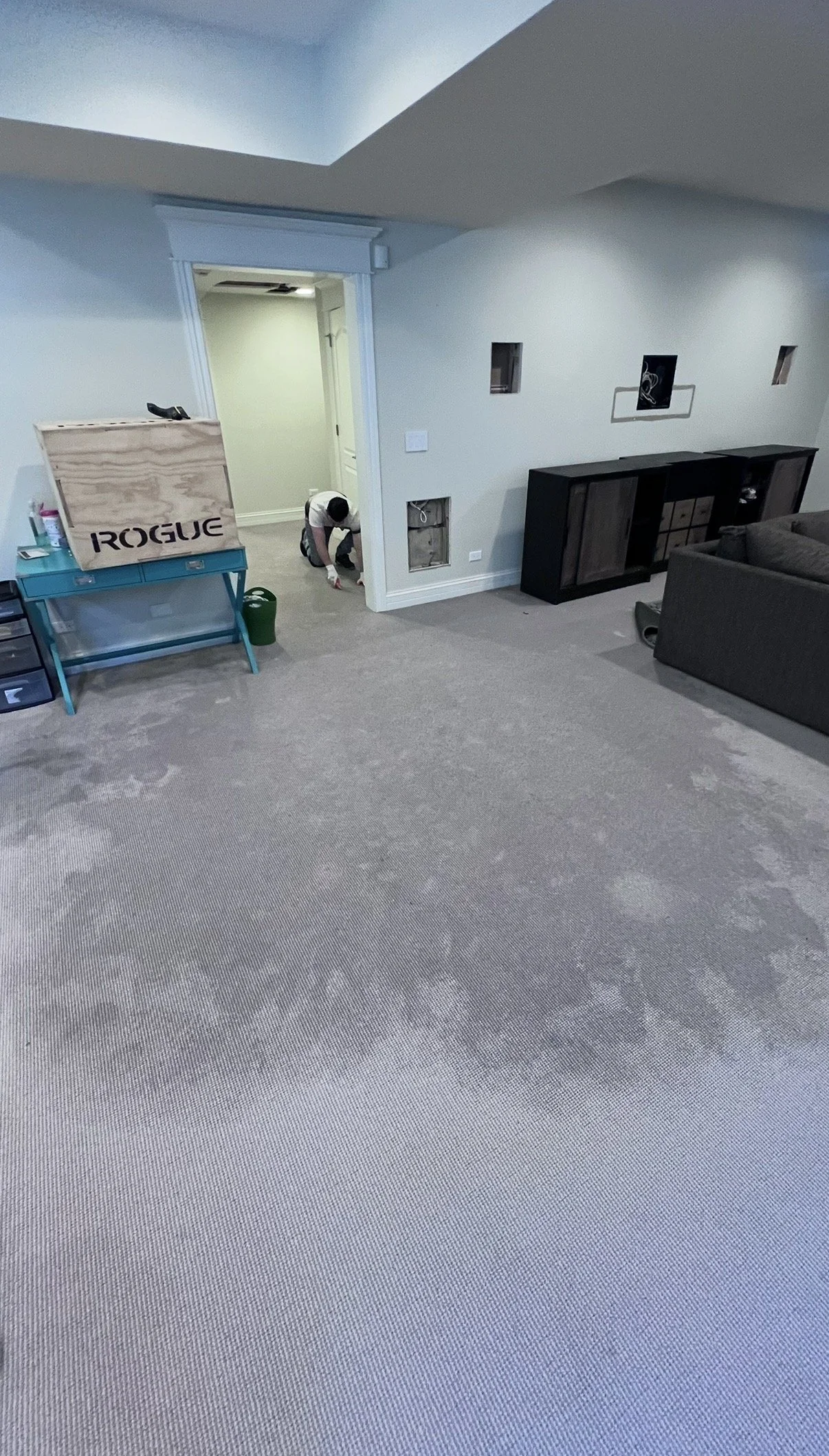
Wet Carpet After Basement Flooding: Save It or Replace It?
Finding wet carpet after a basement flood can be overwhelming. One of the first questions homeowners ask is:
Can the carpet be dried and saved, or does it need to be replaced?
The answer depends on three things:
What caused the water damage
How long the carpet has been wet
How far the moisture spread
Acting fast matters. Waiting too long can lead to mold growth, bad odors, and damage to the materials underneath.
If your basement flooded and your carpet is wet, here’s what you need to know.
How Long Can Wet Carpet Sit Before Mold Starts?
Not long.
In many water damage situations, mold can begin developing in as little as 24 to 48 hours if moisture remains trapped.
Even if the carpet surface feels dry, moisture can still be trapped inside:
Carpet padding
Subfloor materials
Baseboards
Drywall
Wood framing
This hidden moisture is what often causes mold and structural damage later.
That’s why quick water extraction and professional drying is important.
Can Wet Carpet Be Saved After Water Damage?
Sometimes, yes.
Carpet can often be saved if:
The water came from a clean water source
The water was discovered quickly
Extraction started within the first 24 hours
The carpet backing is still intact
The padding is not heavily saturated or contaminated
Proper drying equipment is used
Examples of cleaner water sources may include:
Burst water supply lines
Appliance supply line leaks
Sink overflows (without contamination)
Overflowing tubs from clean water
These are often considered lower-risk water losses under IICRC S500.
When Should Wet Carpet Be Replaced?
This depends heavily on contamination and time.
Here are the most common situations where replacement is necessary:
1. The Water Was Contaminated
Not all water is clean.
Contaminated water may include:
Sewage backups
Toilet overflows involving waste
Sump pump failures
Groundwater seepage
Storm water intrusion through windows or foundation walls
Water entering from outside after heavy rain
Rainwater inside a structure often picks up contaminants from soil, building materials, and debris, making it unsafe to treat like clean water.
This often falls into Category 2 or Category 3 depending on the situation.
2. The Carpet Was Wet Too Long
If carpet has been wet for more than 48 hours, the chances of mold growth increase significantly.
At that point, saving it becomes much less likely.
3. The Carpet Padding Is Fully Saturated
Carpet padding acts like a sponge.
Even if the carpet fibers look okay, the padding underneath may hold moisture and bacteria.
In many jobs, the padding needs to be removed even if the carpet itself can be cleaned and dried.
4. There’s a Strong Musty or Sour Odor
A strong smell after water damage usually means:
Bacterial growth
Microbial activity
Hidden moisture
Odors should never be ignored.
What Happens If You Leave Wet Carpet Alone?
This is where damage gets expensive.
Wet carpet left untreated can lead to:
Mold growth
Subfloor damage
Swollen baseboards
Warped wood flooring
Drywall damage
Odors that spread through the home
Indoor air quality issues
What starts as “just wet carpet” can quickly become a much larger restoration project.
How Do Professionals Know If Carpet Can Be Saved?
A visual inspection alone is not enough.
At ECL Restoration Solutions, we inspect:
Moisture levels in the carpet
Saturation in carpet padding
Moisture in subfloors
Water migration into walls
Moisture behind baseboards
We use moisture meters and thermal imaging to locate hidden moisture that homeowners can’t see.
This is critical because hidden moisture is one of the biggest causes of mold after basement flooding.
How Is Wet Carpet Dried Properly?
Professional drying usually includes:
Emergency Water Extraction
Standing water is removed immediately.
Carpet Inspection
Checking whether the carpet and padding are salvageable.
Moisture Mapping
Locating moisture in surrounding materials.
Removing Wet Padding (if needed)
Heavily saturated or contaminated padding is often removed.
Air movers and dehumidifiers are used to dry the affected materials.
Proper Structural drying helps prevent mold and secondary damage.
Daily Moisture Monitoring
Drying should be monitored until materials return to normal moisture content.
Will Insurance Cover Wet Carpet After Basement Flooding?
It depends on the source.
Insurance may cover:
Burst pipes
Appliance failures
Sudden plumbing leaks
Insurance may not cover:
Groundwater seepage
Flooding from outside without flood coverage
Long-term neglect
Every policy is different, so it’s important to review your coverage.
Should You Save It or Replace It?
In simple terms:
Carpet can often be saved if:
✔ Clean water source
✔ Quick response
✔ No contamination
✔ Minimal saturation
✔ No odor
Carpet often needs replacement if:
✘ Sewage backup
✘ Rainwater intrusion with contamination
✘ Sump pump overflow
✘ Wet for more than 48 hours
✘ Heavy odor
✘ Mold growth
The best way to know for sure is a professional moisture inspection.
Need Help With Wet Carpet After Basement Flooding?
ECL Restoration Solutions provides emergency water damage cleanup, structural drying, carpet drying, and moisture inspections in Willowbrook, Naperville, Downers Grove, Westmont, and surrounding Illinois areas.
If your basement flooded and your carpet is wet, don’t wait.
The faster you act, the better the chance of preventing mold and minimizing damage.