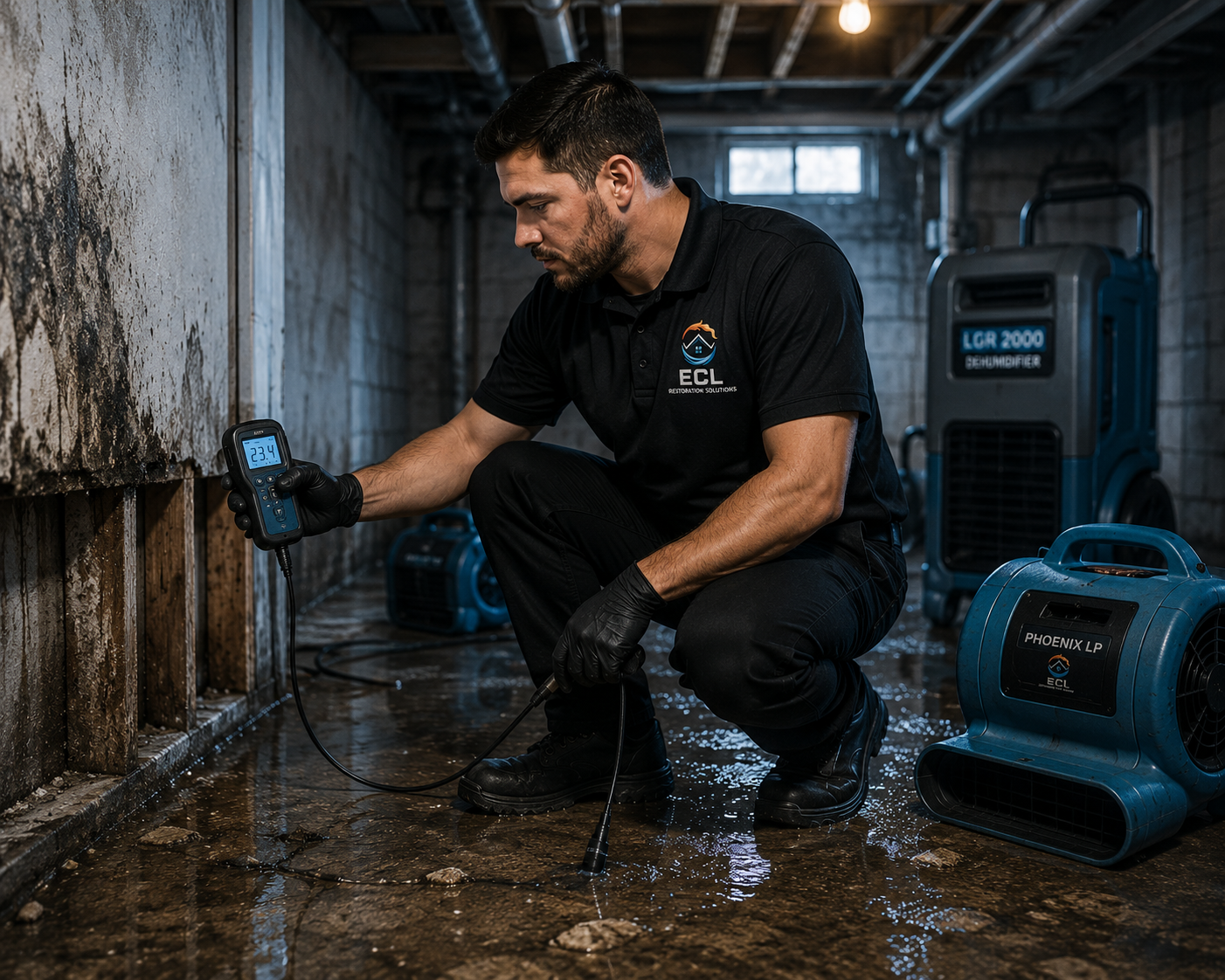
Certified Moisture Inspections After Water Damage: Why Guesswork Leads to Costly Repairs
Water damage is never just what you can see. The real threat is what stays hidden—behind walls, under flooring, inside insulation, and within structural framing. If moisture isn’t properly identified and tracked, the damage continues long after the surface looks dry.
This is why a certified moisture inspection is not optional after any water intrusion event. It’s the difference between controlled restoration and uncontrolled long-term damage.
If you suspect water damage in your home or business in Willowbrook, DuPage County, or surrounding Chicago suburbs, a certified inspection should be done immediately—before mold growth begins or structural materials deteriorate.
Why You Need a Certified Moisture Inspection Immediately
Water spreads farther than people expect. It migrates through materials and can travel behind finishes within minutes to hours.
A certified technician uses professional-grade tools to detect what you cannot see:
Moisture meters for drywall, wood, and subfloors
Thermal imaging to locate hidden wet areas
Hygrometers to measure humidity conditions
Industry drying standards based on material type
Without these tools, drying becomes guesswork—and guesswork is expensive.
The Hidden Damage Most Property Owners Miss
Even when floors feel dry and walls look normal, moisture can still be trapped inside:
Drywall cavities holding saturated insulation
Subfloor moisture under vinyl, wood, or laminate
Baseboards absorbing water at wall joints
Wall framing retaining moisture after surface drying
This is where most future problems come from—mold growth, odors, and structural weakening that show up weeks later.
By the time you notice it, remediation costs have already multiplied.
Why “Fans and Dehumidifiers Only” Is Not Enough
Drying equipment alone does not confirm dryness.
Without certified monitoring:
Equipment may be placed incorrectly
Moisture pockets go undetected
Drying stops too early
Humidity remains trapped in enclosed areas
A proper inspection ensures the drying process is adjusted in real time until materials are actually dry—not just “feel dry.”
Insurance and Liability Protection
A certified moisture inspection is also critical for documentation.
Insurance carriers and adjusters rely on:
Moisture readings before and after drying
Proof that structural materials reached safe levels
Standardized drying logs based on IICRC guidelines
Without documentation, claims can be reduced or disputed. With it, you have proof the job was completed correctly and defensibly.
Why Speed Matters
Time is the biggest factor in water damage outcomes.
Within 24–72 hours:
Mold growth can begin under the right conditions
Materials begin breaking down structurally
Odors and contamination risks increase
A fast, certified inspection prevents small losses from turning into full remediation projects.
Bottom Line
Water damage is not a surface problem—it’s a hidden system problem. If moisture isn’t properly mapped and verified, the structure continues to deteriorate long after cleanup.
A certified moisture inspection ensures the job is done right the first time, protects your property value, and reduces long-term repair costs.
At ECL Restoration Solutions, moisture inspections are performed using industry-standard testing methods to identify hidden moisture and prevent secondary damage before it escalates.
Call to Action
If you’ve had flooding, a sump pump failure, a burst pipe, or any water intrusion in your home or business, don’t rely on assumptions.
Call for a same-day certified moisture inspection in Willowbrook, Westmont, Darien, downers grove, Naperville, BurrRidge, western springs, Hinsdale, Lemont and surrounding Chicago suburbs. Early detection is the cheapest damage control you’ll ever get—and delay is where costs multiply.
Questions to Ask Before Hiring a Water Damage Restoration Company